Canterbury & Kent
Mortgage Valuation vs Building Survey: Do You Really Need Both?
Nearly one in five UK homebuyers who skip an independent survey later discover defects they had no idea existed at the point of purchase. That single statistic reframes the entire debate around Mortgage Valuation vs Building Survey: Do You Really Need Both? The short answer is yes, but the reasons why, and the practical steps to take, deserve a much fuller explanation.
This article cuts through the confusion by explaining exactly what each report does, who it protects, how the RICS regulatory framework governs both, and when upgrading to a Level 3 Building Survey is not just advisable but essential.
Key Takeaways
- A mortgage valuation is produced for the lender, not the buyer, it tells the bank whether the property is worth the loan, not whether it is safe to buy.
- A building survey is produced for the buyer and provides a detailed assessment of the property’s physical condition.
- Both functions are necessary: one is compulsory (the lender valuation), and the other is strongly recommended (the buyer’s survey).
- Combined products exist that cover both functions in a single visit, but the two functions remain legally and practically distinct.
- Choosing the right RICS survey level, 1, 2, or 3, depends on the property’s age, type, and complexity.
What a Mortgage Valuation Actually Does
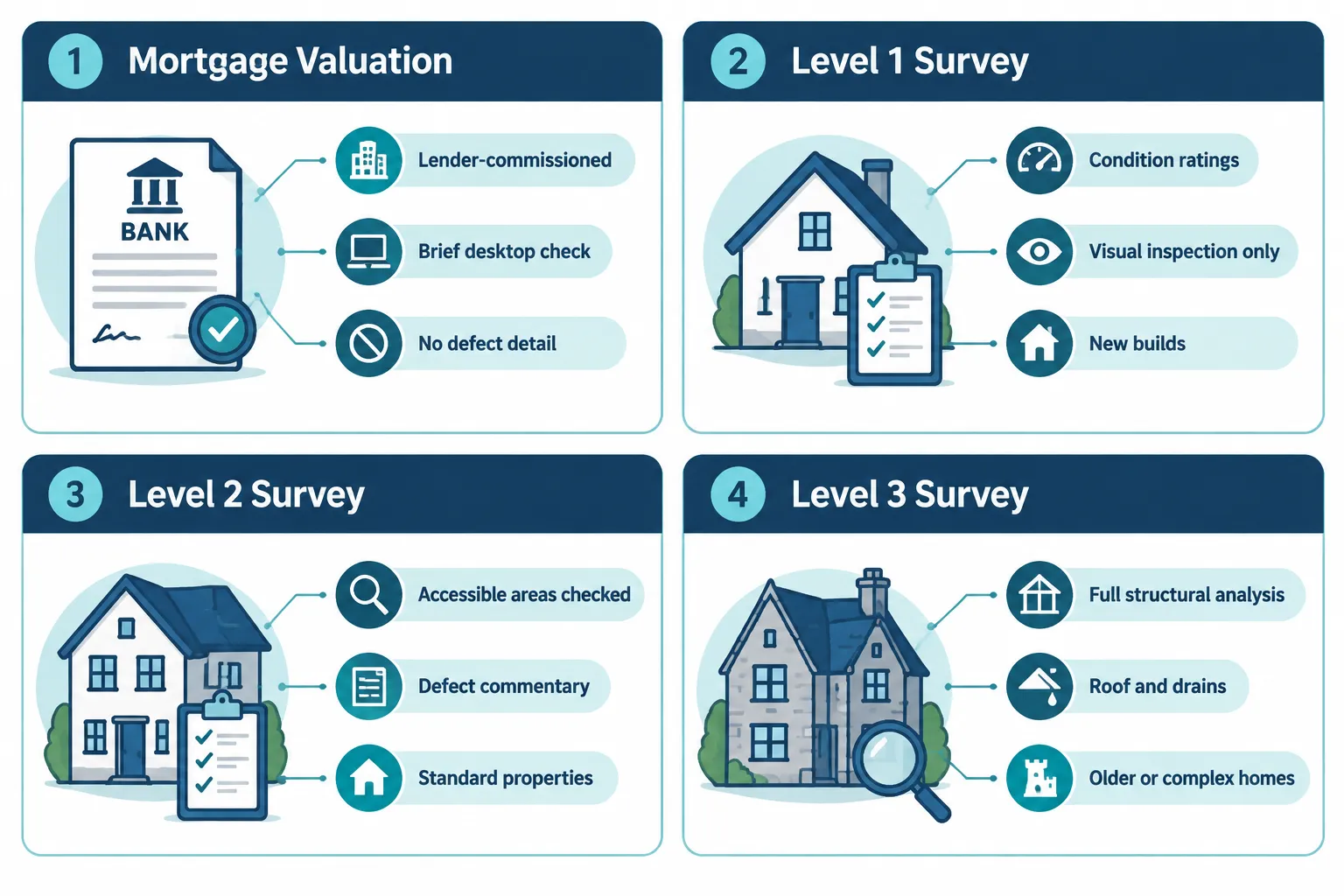
A mortgage valuation is a brief assessment commissioned and owned by the lender. Its sole purpose is to confirm that the property offers adequate security for the loan being advanced. It answers one question: is this property worth at least the purchase price the lender is being asked to fund?
That is a fundamentally different question from: what is the condition of this property, and what will it cost to repair?
Key characteristics of a mortgage valuation:
- Typically lasts 15 to 30 minutes on site
- May be conducted as a desktop or automated valuation in some cases [4]
- Does not include a detailed structural inspection
- Does not identify hidden defects, damp, subsidence, or roof deterioration
- The report belongs to the lender, buyers may receive a copy, but it is not prepared for their benefit [7]
Buyers often pay a fee for the mortgage valuation as part of their mortgage application costs. Receiving that fee receipt creates a false sense of security. The valuation is not a health check on the property. It is a risk check for the bank.
“A mortgage valuation is not a survey. It will not tell you whether the property is in good condition or whether it is a sound investment for you personally.”, RICS guidance [4]
For buyers who want to understand the true financial implications of a purchase, including potential repair bills that could run into tens of thousands of pounds, an independent building survey is the only instrument that delivers that information.
Understanding RICS Building Survey Levels
The RICS Home Survey Standard is the governing framework for all residential surveys carried out by RICS-registered surveyors in the UK [1]. The second edition of the standard, updated in April 2026, reinforces minimum consumer protection requirements and sets out clear expectations for what each survey level must deliver [10].
From 1 September 2026, new home survey reports must comply with the updated RICS framework, strengthening the protections available to buyers [8].
There are three survey levels:
Level 1, Condition Report
The most basic option. It provides condition ratings for different elements of the property but offers limited commentary on defects. It is best suited to new-build homes or properties in demonstrably good condition. It does not include advice on repairs or maintenance.
Level 2, HomeBuyer Report
The most commonly purchased survey for standard residential properties. It covers accessible and visible areas of the property, identifies defects that need attention, and provides advice on maintenance. It may include a market valuation if the buyer requests one. This is appropriate for conventional properties built after approximately 1900 that are in reasonable condition. For guidance on choosing between levels, see the detailed breakdown of the difference between Level 2 and Level 3 survey.
Level 3, Building Survey (Full Structural Survey)
The most comprehensive inspection available for residential property [1]. A Level 3 survey covers the structure, fabric, and condition of the building in detail. It includes areas that are accessible but not necessarily visible, such as roof spaces, underfloor voids, and outbuildings. It provides detailed advice on defects, their causes, and the likely cost implications of repair.
The RICS Building Surveys Level 3 inspection is the appropriate choice for:
- Properties built before 1900
- Listed buildings or buildings in conservation areas
- Properties with obvious signs of structural movement, damp, or significant disrepair
- Non-standard construction (timber frame, thatched roofs, concrete panels)
- Any property where the buyer has concerns about condition
For buyers purchasing in the current 2026 market, where recovering agreed sales volumes are bringing more older stock to market, the building surveys for 2026 agreed sales recovery resource provides useful context on the types of defects being identified in this cycle.
Mortgage Valuation vs Building Survey: Do You Really Need Both?, The Practical Answer
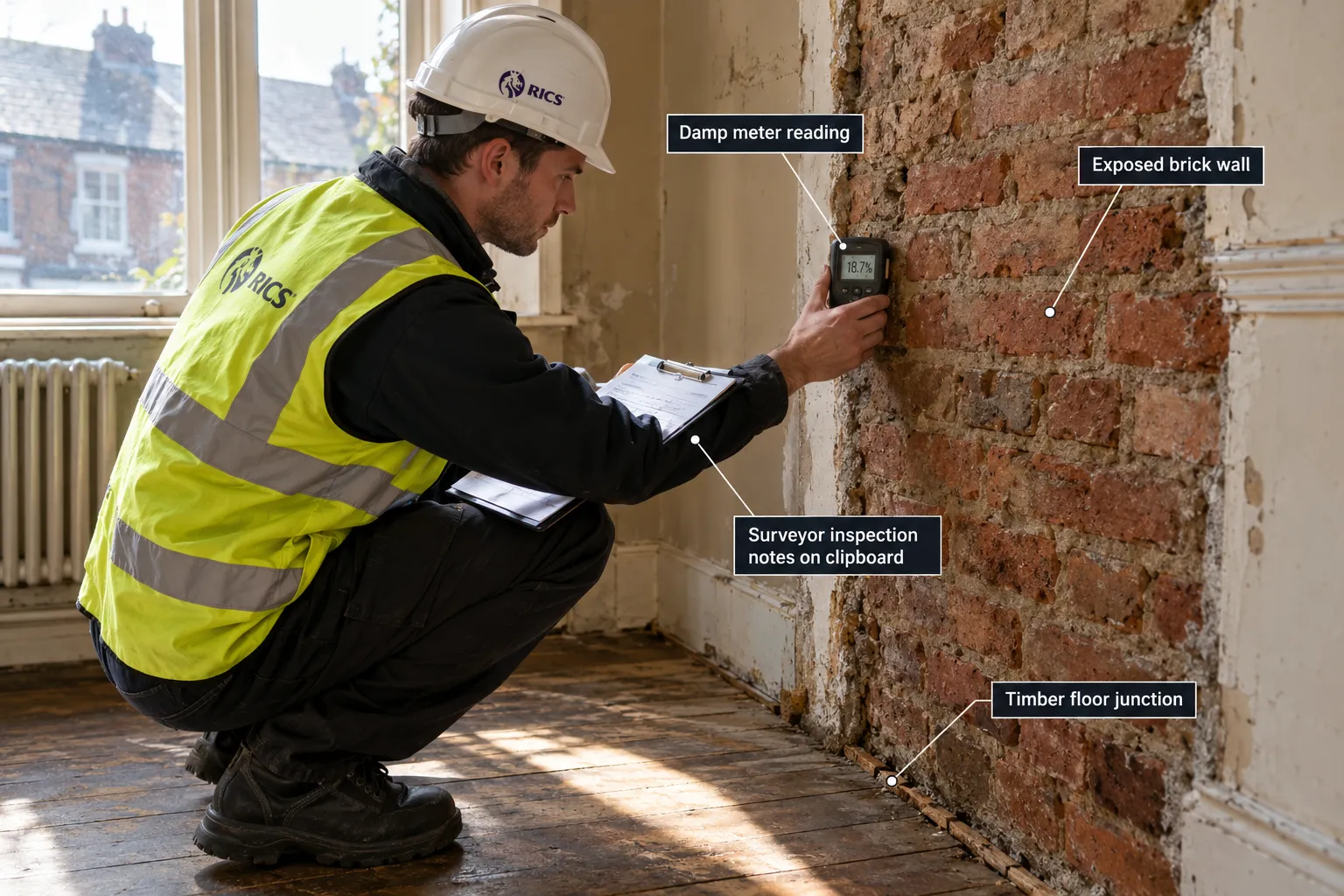
The question of whether buyers genuinely need both a mortgage valuation and a building survey is one of the most searched queries in UK property, and the answer requires separating two distinct issues.
The mortgage valuation is not optional when using a mortgage. The lender will commission it regardless of what the buyer chooses to do. The buyer cannot substitute their own survey in place of the lender’s valuation.
The building survey is not compulsory, but the consequences of skipping it can be severe. No regulatory body requires buyers to commission an independent survey. However, the RICS Home Survey Standard FAQs, updated in September 2026, are unambiguous: consumers should not rely on a mortgage valuation as a substitute for an independent inspection [5].
The financial case is straightforward. A Level 3 Building Survey typically costs between £600 and £1,500 depending on property size and location. Undiscovered structural defects, roof timbers, subsidence, penetrating damp, failing drainage, can cost between £5,000 and £50,000 or more to rectify. The survey cost is a rounding error against that exposure.
There is also a negotiation argument. A building survey that identifies significant defects gives the buyer documented, professional evidence to renegotiate the purchase price or request that the seller carries out remedial work before exchange. Without that evidence, the buyer has no leverage. For properties with complex structural histories, the building survey expertise in construction defect litigation resource illustrates how professional survey findings translate directly into financial outcomes.
Combined Products: One Visit, Two Functions
Some lenders and surveying firms offer combined products, typically a Level 2 HomeBuyer Report that includes a mortgage valuation. In these cases, the surveyor conducts a single visit and produces a report that satisfies both the lender’s valuation requirement and the buyer’s need for condition information.
This is a practical solution that reduces cost and avoids the inconvenience of two separate appointments. However, buyers should understand the following:
- The two functions remain legally distinct even within a combined product
- The valuation section still belongs to the lender
- The condition section is still the buyer’s protection
- A combined Level 2 product is not a substitute for a Level 3 survey on a complex or older property
For buyers purchasing conventional vs non-standard homes, the guide on building surveys for conventional vs non-standard homes provides specific guidance on level choices in the current market.
When to Upgrade to a Level 3 Building Survey
The decision to upgrade from a Level 2 to a Level 3 survey is one of the most commercially important choices a buyer makes. The additional cost is modest relative to the additional protection delivered.
Rule of thumb:If the property is over 75 years old, has had visible alterations, shows any signs of movement or damp, or is built from non-standard materials, commission a Level 3 survey. The cost of not doing so is almost always higher than the cost of the survey itself.
Specific triggers for a Level 3 survey:
| Property Characteristic | Recommended Level |
|---|---|
| New build or modern flat in good condition | Level 1 or Level 2 |
| Standard house built post-1930, good condition | Level 2 |
| Victorian or Edwardian terrace | Level 3 |
| Listed building or conservation area | Level 3 |
| Any property with visible cracks or movement | Level 3 |
| Thatched, timber frame, or concrete construction | Level 3 |
| Property with extensions or conversions | Level 3 |
| Any property where the buyer has doubts | Level 3 |
Buyers purchasing older properties should also consider the detailed guidance on defect diagnosis in older properties and building pathology essentials, which covers the specific defect types most commonly found in pre-1950 stock.
For properties with known or suspected damp issues, a specialist damp survey may be recommended alongside or following the main building survey.
The 2026 Regulatory Context: Stronger Consumer Protections
The RICS Home Survey Standard has been strengthened significantly in 2026. The second edition, published with an April 2026 update, sets higher minimum standards for what RICS-registered surveyors must deliver and how they must communicate findings to consumers [10].
The updated FAQs published by RICS in September 2026 place explicit emphasis on consumer protection, making clear that:
- Surveyors must communicate the limitations of each survey level to clients before instruction [5]
- Reports must be clear, accessible, and actionable for a non-specialist reader [3]
- The distinction between a mortgage valuation and an independent survey must be explained [5]
This regulatory direction reflects a broader trend: the UK property market has historically underserved buyers in terms of pre-purchase information. The strengthening of the Home Survey Standard is a direct response to that gap [2].
For buyers in 2026, this means the quality floor for RICS-compliant surveys has risen. Any surveyor operating under the RICS framework must now meet a higher standard of disclosure and reporting than was required even three years ago [6].
The defect detection in recovery properties and RICS January 2026 market data analysis provides a useful view of how defect patterns are shifting as older stock re-enters the market in the current cycle.
Common Misconceptions About Mortgage Valuations and Building Surveys
Misconception 1: “The lender’s surveyor will flag anything serious.”
Not necessarily. The mortgage valuation surveyor is not instructed to find defects for the buyer’s benefit. They are instructed to confirm value for the lender. They may note obvious issues that affect value, but they are not conducting a condition survey [7].
Misconception 2: “A survey is only worth it on older properties.”
New builds carry their own risks, snagging defects, incomplete works, and developer shortcuts that are not visible without a specialist inspection. The snagging and final building surveys for new build homes guide explains why buyers of new properties should still commission an independent inspection before the defects liability period expires.
Misconception 3: “Surveys are too expensive.”
The structural survey pricing guide sets out current market rates in detail. For most properties, a Level 2 survey costs less than one month’s mortgage payment. A Level 3 survey on a Victorian terraced house typically costs less than the average repair bill for a single undiscovered structural defect.
Misconception 4: “If the survey finds problems, I have to pull out.”
Survey findings are negotiating tools, not deal-breakers. A professional report with costed repair recommendations gives the buyer the information needed to negotiate a price reduction, request remedial works, or make an informed decision to proceed or withdraw.
Conclusion
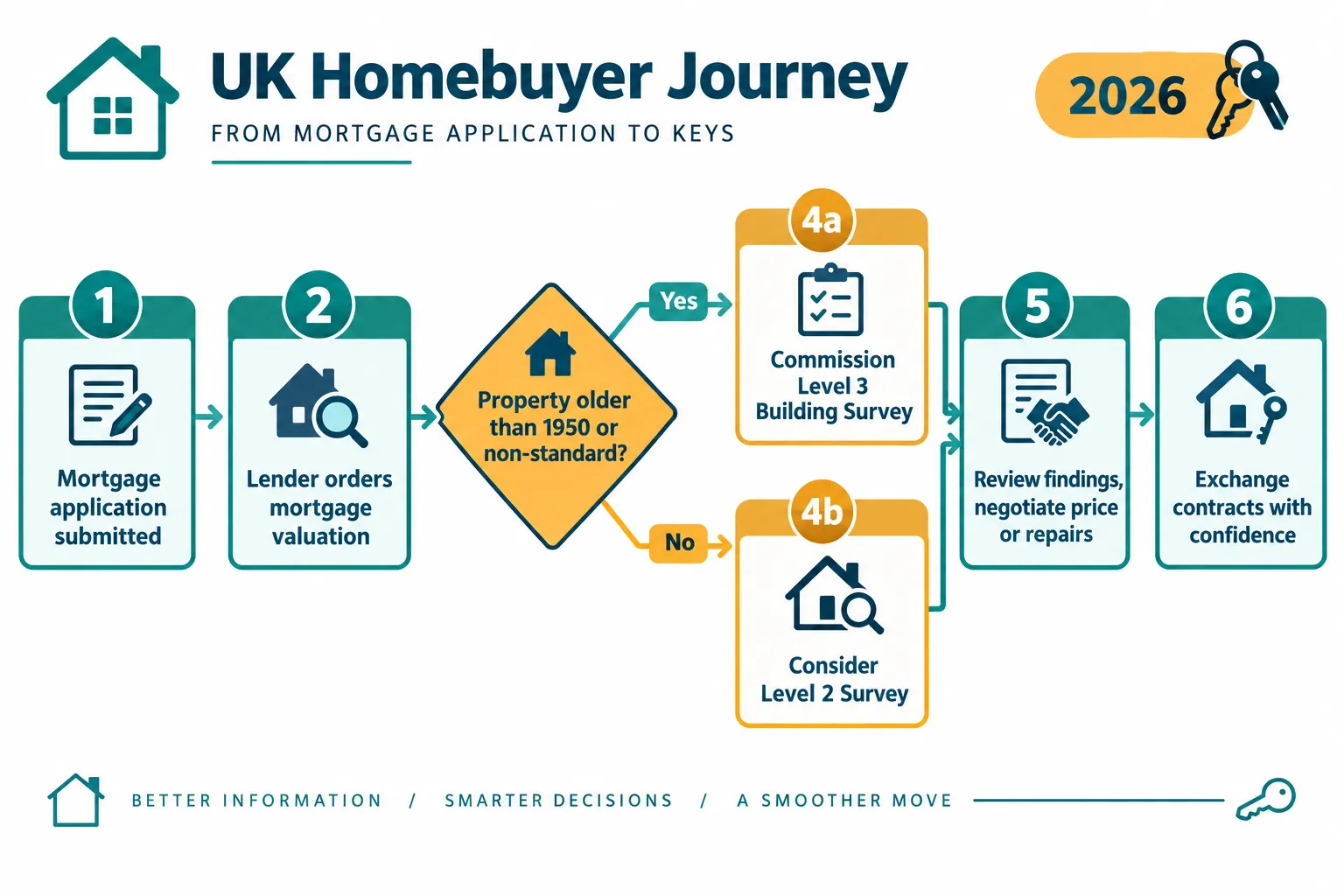
The debate around Mortgage Valuation vs Building Survey: Do You Really Need Both? resolves clearly when the two instruments are understood on their own terms. A mortgage valuation protects the lender. A building survey protects the buyer. They serve different purposes, answer different questions, and carry different legal weight.
In practice, both functions need to be covered. The lender’s valuation is automatic when a mortgage is involved. The buyer’s survey is a choice, but it is one of the most financially consequential choices in the entire transaction.
Actionable next steps for buyers in 2026:
- Do not confuse the mortgage valuation with a survey. Read the report carefully and note what it does and does not cover.
- Assess the property type honestly. If the property is pre-1950, non-standard, or shows any signs of defects, commission a Level 3 Building Survey.
- Use survey findings to negotiate. A professional report with repair costings is a legitimate basis for price renegotiation.
- Check your surveyor’s credentials. Ensure they are RICS-registered and operating under the updated 2026 Home Survey Standard.
- Do not skip the survey to save money. The cost of a survey is always less than the cost of discovering a major defect after completion.
The RICS framework continues to evolve in the buyer’s favour. Taking advantage of the protections it offers starts with commissioning the right survey for the right property.
References
[1] Home Surveys – rics.org
[2] The New Home Survey Standard – ww3.rics.org
[3] Home Survey Standard Nov 2020 – rics.org
[4] Mortgage Valuations Explained Difference Building Survey Down Valuations – residentialsurveying.co.uk
[5] Home Survey Standard Frequently Asked Questions – rics.org
[6] Building Surveying Standards – rics.org
[7] Mortgage Valuations Explained Difference Building Survey Down Valuations – residentialsurveying.co.uk
[8] Home Survey Standards – rics.org
[10] Home Survey Standard 2nd Edition April 2026 Update – rics.org
Related services from Canterbury Surveyors
- Building expert witness surveyors
- RICS property valuations
- RICS Homebuyer Surveys (Level 2)
- Building Surveys (Level 3)
Get a fixed-fee quote or call 0204 579 8270.