
Canterbury & Kent
Your First Home Scheme 2.5% Deposit: What Kent First-Time Buyers Need to Know in October 2026
A deposit worth just 2.5% of a home’s price sounds almost too good to be true. For thousands of renters across Canterbury and the wider Kent market, that is precisely the number now dominating conversations about getting onto the property ladder. The Your First Home scheme 2.5% deposit Kent first-time buyers October 2026 announcement has triggered a wave of interest, questions, and, rightly, caution, because the fine print is still three and a half weeks away.
This analysis, published by Canterbury Surveyors on 4 October 2026, sets out exactly what has been confirmed, what remains unknown, and the practical steps Kent buyers should take now, before reserving a new-build plot on the strength of headlines alone.
Key Takeaways
- Prime Minister Andy Burnham confirmed the Your First Home scheme at Labour’s Liverpool conference on 29 September 2026: a 2.5% deposit, a 20% government equity loan, and a 77.5% mortgage, for new-build homes in England only.
- Income caps, regional price caps, and full lender rules will not be published until the Autumn Budget on 28 October 2026, eligibility cannot be confirmed yet.
- Mortgage rates are around 5.2% (a three-year high) and lenders have been pulling sub-5% deals, so the cheap deposit does not mean cheap borrowing.
- A smaller deposit plus a 20% equity loan concentrates negative-equity risk for Kent buyers if new-build price premiums soften.
- Whatever scheme is used, an independent RICS Level 2 survey and a professional snagging inspection remain essential before and after completion on any new-build home.
What Was Announced and Why It Matters for Kent
Andy Burnham used his speech to the Labour Party Conference in Liverpool on Tuesday 29 September 2026, roughly ten weeks into his premiership, to formally launch Your First Home, having been trailed by the Ministry of Housing, Communities and Local Government three days earlier. His framing was direct:
“Your First Home will reduce the size of the deposit you need. It will open up home ownership to those not backed by the bank of mum and dad.”
The mechanics are straightforward on paper. A buyer puts down a 2.5% deposit, the government provides an equity loan equal to 20% of the purchase price (interest-free for an initial period), and the buyer secures a mortgage covering the remaining 77.5%. The scheme applies only to new-build homes in England, bought through participating developers.
For Kent, where new-build activity continues around Ashford, Maidstone, Dartford, and the wider Canterbury district, this is significant. Smaller deposits have historically been the single biggest obstacle for local renters trying to buy. Nicholas Mendes of broker John Charcol described the deposit hurdle as “the single biggest barrier to getting onto the ladder”, a view that will resonate with many Kent households currently priced out by rising rents and stubborn mortgage rates.
Paul Turner of the National House Building Council (NHBC) welcomed the move, calling it “a welcome boost for the industry,” while adding a note of realism: planning reform needs to speed up if new supply is to keep pace with demand this scheme could generate.
Your First Home Scheme 2.5% Deposit Kent First-Time Buyers October 2026: What Is Still Unknown
Despite the fanfare, several critical details will not be confirmed until the Autumn Budget on Wednesday 28 October 2026. This is the date Kent buyers should circle, not the conference announcement.
Outstanding questions include:
- Income caps, what household income thresholds will apply to qualify.
- Regional price caps, what maximum property values will be permitted in the South East and Kent specifically.
- Lender appetite, which banks and building societies will actually offer mortgages against the 77.5% portion.
- Affordability treatment, how the 20% equity loan will be factored into mortgage stress tests, which directly affects how much buyers can actually borrow.
Until these are published, nobody in Canterbury or anywhere else in Kent can say with certainty whether a given new-build plot, or a given household income, will qualify. Estate agents and developers may already be generating enquiries on the back of the announcement, but reserving a plot before the Budget carries real risk of disappointment if the price caps exclude the development in question.
Market Backdrop: Why Timing Matters Right Now
The scheme lands against a market that is cooling, not booming. Nationwide’s September 2026 house price index reported that annual house price growth has roughly halved, and the house-price-to-earnings ratio is now at its lowest level since 2015, in theory, a more affordable backdrop for buyers.
However, borrowing costs tell a different story. Average mortgage rates sit around 5.2%, according to Zoopla, a three-year high, and major lenders withdrew sub-5% deals in the week to 2 October 2026. A cheaper deposit does not offset a more expensive mortgage rate over the life of the loan. Kent buyers weighing up Your First Home need to look at monthly affordability holistically, not just the upfront cash required.
It is also worth noting what is not changing. Burnham indicated in July that stamp duty reform “won’t be happening” alongside this scheme, so buyers should not factor in any stamp duty saving when budgeting for next spring.
Kent New-Build Hotspots and the Negative Equity Question
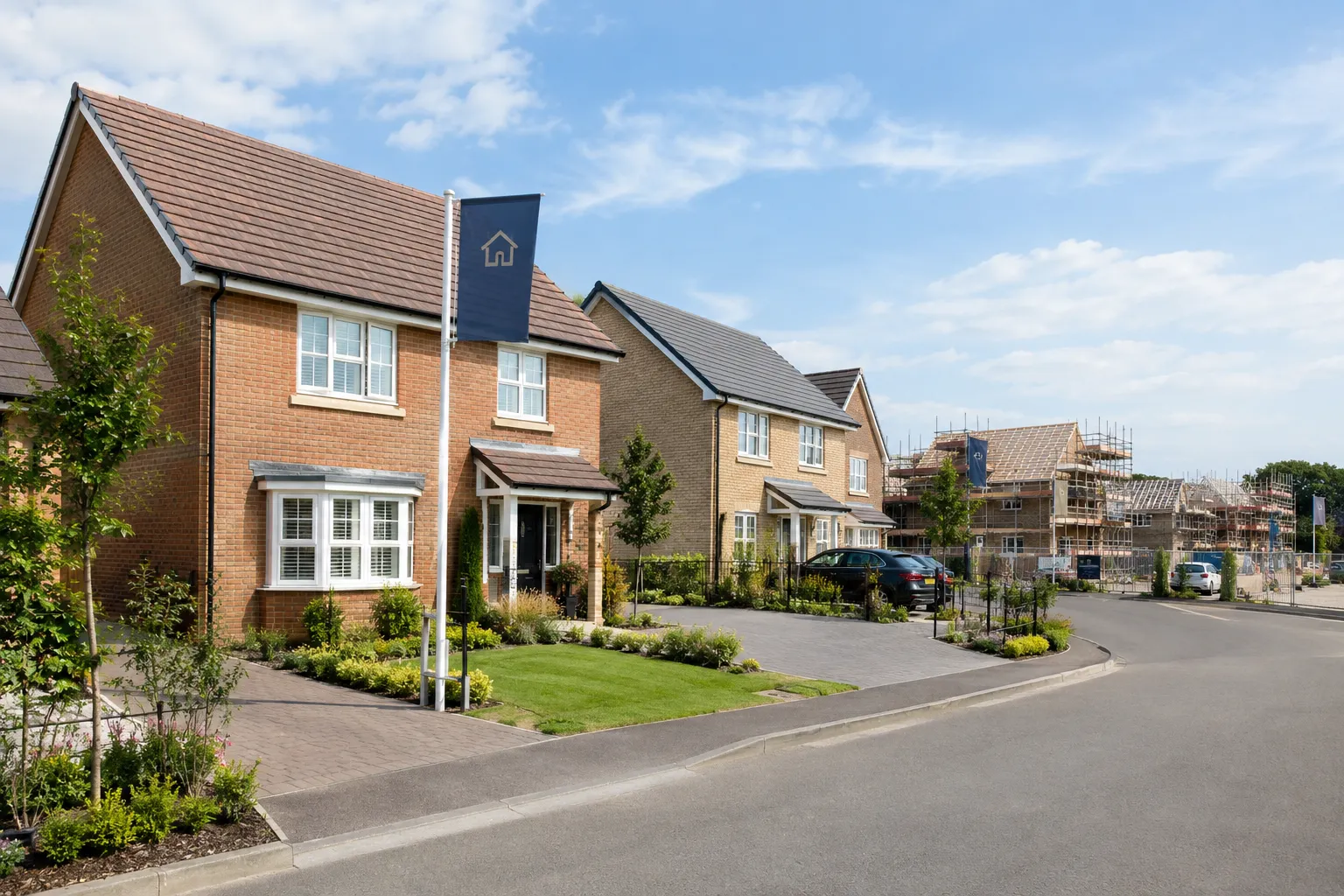
Kent has no shortage of active new-build activity across its towns and commuter belts, from the Canterbury district through to Ashford, Maidstone, and the Thames Gateway corridor. These are exactly the kinds of developments likely to be marketed under Your First Home once participating developers sign up.
Here is the risk Kent buyers should weigh carefully. New-build homes typically carry a price premium over comparable second-hand stock, buyers pay for the newness, the warranty, and the show-home finish. A 2.5% deposit combined with a 20% government equity loan means a buyer starts with just 2.5% of their own equity at completion, half the 5% cash stake a Help to Buy buyer put in, with the rest of the price covered by the mortgage and the government loan.
If that new-build premium unwinds, as it can once the development is fully built out and no longer being sold off-plan, a buyer with minimal initial equity is exposed to negative equity far more quickly than someone with a larger cash deposit. This is a structural feature of low-deposit, equity-loan schemes, not a flaw unique to Your First Home, but it is sharper here given the smaller cash buffer involved.
Why an Independent Survey Still Matters on a New Build
A common misconception is that new-build homes do not need a survey because everything is, by definition, new. That is not correct, and it matters more, not less, under a low-deposit scheme where the buyer’s financial cushion is thinner.

An independent RICS Level 2 Homebuyer Survey assesses the condition of the property and flags issues a valuation alone will not catch, damp, poor ventilation, defective finishes, or snagging items that should be resolved by the developer before completion. For readers weighing survey types, our comparison of an ISVA homebuyer survey versus a RICS Level 2 report explains the practical differences.
A separate snagging inspection, ideally carried out independently before legal completion and again shortly afterwards, identifies cosmetic and functional defects, from poorly fitted doors to incomplete insulation, while the developer is still contractually obliged to fix them. Our detailed guide on snagging and final building surveys for new-build homes covers how this works and why timing is critical before the defects period ends.
Most new-build homes in England come with an NHBC Buildmark warranty or equivalent, typically covering structural issues for up to ten years and shorter-term cover for fixtures and finishes in the early years. This warranty is valuable, but it is not a substitute for an independent inspection, warranty claims can be slow, and some defects fall outside standard cover.
Readers with a broader interest in how building surveys are adapting to today’s market should also see our analysis of building surveys for first-time buyers navigating the 2026 market recovery and our piece on defect prioritisation for buyers in a recovering market.
Help to Buy vs Your First Home: A Quick Comparison
The old Help to Buy scheme, which ended in 2023, shares the equity-loan structure but differs on the deposit required and regional rules.
| Feature | Help to Buy (ended 2023) | Your First Home (announced Sept 2026) |
|---|---|---|
| Minimum deposit | 5% | 2.5% |
| Government equity loan | 20% (40% in London) | 20% (regional detail pending) |
| Buyer mortgage | 75% (60% in London) | 77.5% |
| Property type | New-build only | New-build only, England |
| Price/income caps | Regional caps applied | Not yet published, due 28 October 2026 |
| Status | Closed | Details confirmed at Autumn Budget |
The key takeaway is that the headline deposit has halved, but the wider rules, caps, lender participation, affordability treatment, are not yet locked down. Kent buyers comparing the two schemes should treat Your First Home as a framework, not a finished product, until the Budget.
Questions to Ask Before Reserving a Plot in Kent
Before signing a reservation agreement on any Kent new-build home marketed under Your First Home, buyers should ask the developer and their broker the following:
- Is this specific development confirmed as participating in the scheme, or merely “expected to be eligible”?
- What happens to the reservation fee if the Budget’s price or income caps rule the property out?
- Which lenders have confirmed they will offer the 77.5% mortgage against this scheme, and at what rate?
- What is the length of the NHBC Buildmark warranty, and what exactly does it exclude?
- Will an independent snagging inspection be permitted before legal completion?
- What is the realistic build-out timetable for the wider development, and could later-phase pricing affect the resale value of an earlier plot?
For buyers wanting a wider market view before committing, our overview of the Kent and South East property market context is a useful companion read, alongside our guide on whether homebuyer reports are still enough in 2026 or when a full building survey is warranted.
An Important Clarification: This Is Not Mortgage Advice
Canterbury Surveyors is a firm of chartered building surveyors, not a mortgage broker or financial adviser. Nothing in this article should be read as advice on whether Your First Home, a traditional mortgage, or any other financing route is suitable for an individual’s circumstances. Questions about affordability, lender criteria, and how the equity loan is treated in income multiples should be directed to a qualified, FCA-regulated mortgage broker. Our role, and the focus of this article, is the physical condition and build quality of the property being purchased, a separate but equally important part of the buying process.
FAQ
Does the 2.5% deposit apply to all homes in Kent? No. Your First Home applies only to new-build homes in England, sold through participating developers. Existing homes, including most of Canterbury’s period and Victorian housing stock, are not covered.
When will I know if I am eligible? Full details, including income caps and regional price caps, are due in the Autumn Budget on 28 October 2026. Eligibility cannot be confirmed before that date.
Is the government equity loan interest-free forever? It is interest-free for an initial period, according to the announcement. The duration and terms after that period have not yet been published.
Do I still need a survey on a brand-new home? Yes. New-build status does not guarantee defect-free construction. An independent RICS Level 2 survey and a separate snagging inspection remain strongly advisable.
Will stamp duty change alongside this scheme? No change is expected. Burnham indicated in July that stamp duty reform “won’t be happening” in connection with this announcement.
Should I reserve a plot now, before the Budget? Buyers should proceed with caution. Reserving before price caps and lender terms are confirmed risks losing a reservation fee or finding the property is ineligible.
Conclusion
The Your First Home scheme 2.5% deposit Kent first-time buyers October 2026 story is genuinely significant, it addresses the single biggest barrier many renters face, but it is also, as of this writing, an announcement without a rulebook. Kent buyers should treat the next three and a half weeks as a research and preparation window, not a deadline to rush a reservation. Use the time to speak to an independent, FCA-regulated mortgage broker about affordability, and to understand exactly what a new-build premium and a thin equity cushion could mean if the market shifts.
Once the Autumn Budget clarifies the caps and lender rules on 28 October 2026, and once a specific Kent plot is on the table, the physical due diligence still has to happen. Contact Canterbury Surveyors to arrange a RICS Level 2 survey or an independent snagging inspection before you exchange, a small cost that protects the biggest financial commitment most first-time buyers will ever make.
Related services from Canterbury Surveyors
- RICS property valuations
- RICS Homebuyer Surveys (Level 2)
- Building Surveys (Level 3)
- Structural engineers in Canterbury & Kent
Get a fixed-fee quote or call 0204 579 8270.